
Our first Portuguese novel, Tudo que o rio sabe, is set on the Capibaribe.
Mariana Salgado is a reporter. Recife sends her up into the interior of Pernambuco, where an environmental inspector has vanished four days before he was due to testify. She has his field notebook, a set of coordinates that match no official map, and a fisherman who will barely talk to her.
The river is not scenery in that story. It is the route she takes and the thing everyone is lying about. So before the book comes out, here is what other people have written along the same water.
A surprising number of Brazil’s best-known writers picked the same river. Most of what they left behind is harder than it looks, so this runs in the order you can get to it.
Two spellings for one river
The Capibaribe starts in the dry interior, near the towns of Poção and Jataúba. It runs about 270 kilometers to the sea at Recife, crossing 42 towns on the way. Caruaru is one of them. So is a place called Santa Cruz do Capibaribe, which took the river’s name and kept it.
The name comes from Tupi and means the river of the capybaras. You can still see the animal inside it, though modern Portuguese spells the animal capivara, with a v.
In 1925 Gilberto Freyre was putting together a book to mark a hundred years of the Diário de Pernambuco, and he asked the poet Manuel Bandeira to write something about the Recife he grew up in. Bandeira sent back “Evocação do Recife.” He spelled the river two ways in the same poem: Capiberibe and Capibaribe. He said later that it was half a dig at a teacher who had once corrected his pronunciation, and half a choice about how the line sounded.
The river writes its own report
João Cabral de Melo Neto was born in Recife in 1920. He joined the diplomatic service in 1945 and spent most of his working life abroad, and he kept writing about this river from a long way away.
O cão sem plumas was printed in 1950, while he was posted to Barcelona. Its four sections are called “Paisagem do Capibaribe I,” “Paisagem do Capibaribe II,” “Fábula do Capibaribe III” and “Discurso do Capibaribe IV.” The contents page says the river’s name four times before you read a word of the poem.
Four years later he published a longer one, with a title that tells you the whole plan: O rio, ou, Relação da viagem que faz o Capibaribe de sua nascente à cidade do Recife. A relação da viagem was the report a colonial official filed with the crown after a journey. Where he went, what he saw, in order. Cabral gave that form to the water and let the river file the report itself, in the first person, from the source down to the city. The Academia Brasileira de Letras lists both with their dates.
Following the current to Recife
Morte e vida Severina came out in 1955. Cabral called it an auto de natal pernambucano, a Pernambucan nativity play.
Severino is a retirante, one of the people who leave the dry interior for the coast when the land stops feeding them. He walks out of the sertão and follows the river down, through the agreste, then the sugar country, then the flat land near the sea. The poem sets him down in Recife at the water’s edge. He is going the way the river goes.
This is the one Brazilians are most likely to have read. It has been listed on university entrance reading lists.
Forty years of crabs
One image came out of this water three times, across two generations and a change of medium.
Cabral’s 1950 poem sits in the estuary mud. In 1967 Josué de Castro published a novel called Homens e caranguejos, set in the mangroves of the Capibaribe in Recife. Castro was born in the city in 1908, wrote a well-known book about hunger in 1946, and said he grew up in that mud. Then in the early 1990s a group of musicians in Recife passed around a manifesto called “Caranguejos com cérebro,” which means crabs with brains. Chico Science and Nação Zumbi released Da lama ao caos in 1994. Science grew up in Rio Doce, in the mangrove country just north of Recife, and by one account used to catch crabs there to sell at the market.
Three works, forty years, one animal, one estuary.
Paulo Freire’s Capibaribe
Paulo Freire was born in Recife in September 1921, in a neighborhood called Casa Amarela. He became the most widely read writer on teaching adults to read that Brazil has produced.
On March 3, 1955, a group of teachers with Freire at the front of it started a school in the city. They called it the Instituto Capibaribe. Classes began on the seventh. It is still open.
By then the river had been a poem twice over. It was also the name above the door of a school.
Where to start
A hundred years of writers went to this river, and almost none of them were writing for anyone learning the language. That is the gap our book was published into.
Books along the Capibaribe
6 items-
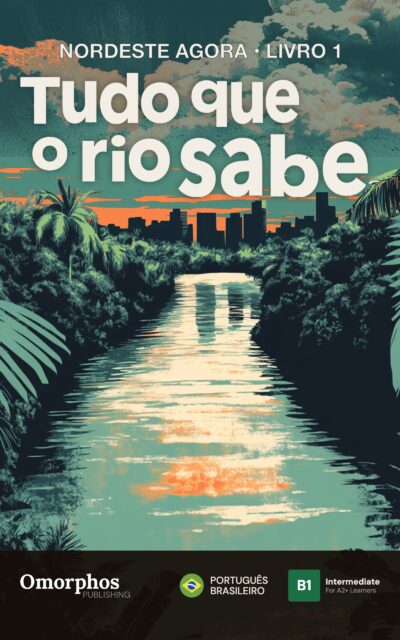 Tudo que o rio sabe Our book
Mariana Salgado is sent from Recife into the interior of Pernambuco to find out what happened to an environmental inspector who vanished a week before he was due to testify. She has his field notebook, a set of coordinates that don't match any official map, and a fisherman who says almost nothing at all. The river holds more than anyone is willing to say out loud.
- Morte e vida Severina
A man walks out of the dry interior and follows the river down to Recife. The 1955 poem that put this water in front of every Brazilian reader.
- Libertinagem
The 1930 collection holding “Evocação do Recife” — the poem Freyre commissioned, and the one that spells the river both ways.
- O rio
The river narrates its own journey from the source to the city, in the form of a colonial travel report.
- O cão sem plumas
Four sections, all of them named for the Capibaribe, written from a posting in Barcelona in 1950.
- Homens e caranguejos
A 1967 novel set in the mangroves the poets kept coming back to, by a man who grew up in them.
Tudo que o rio sabe is set on this same river, in the Portuguese people actually speak in Pernambuco and the Northeast. Mariana follows the Capibaribe into the interior the same way Cabral’s poem follows it down to the sea, and that is what reading in Brazilian Portuguese looks like.
Tudo que o rio sabe is the first book in Nordeste Agora, from Omorphos Publishing.
Comments